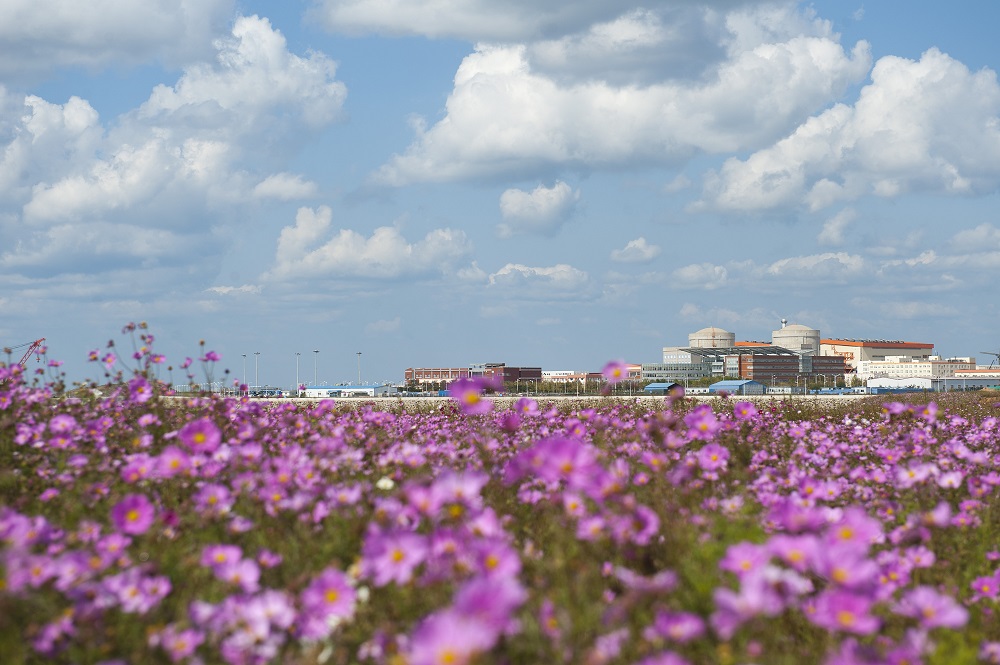
After an unseasonably dry winter and a hosepipe ban declared for much of the South East of England, clearly there’s a need to become more water wise.

So how can we deal with this in our gardens? Choosing the right plants to cope with dry conditions is a good place to start.

Small and front of border plants

Alchemilla mollis

A beautiful and useful perennial. Alchemilla mollis has scalloped fresh green leaves that catch droplets of water. From June to September it produces a frothy mass of zesty yellow flowers. Useful in a gravel garden or for edging paths. Once established its drought tolerant.

Lavandula angustifolia ‘Munstead’

A compact Lavender named after Gertrude Jekyll’s garden at Munstead Wood. It has slender aromatic grey green leaves and dense spikes of fragrant blue / purple flowers. It works well in a gravel garden, clipped into a sphere for a more formal look, or for edging pathways. The flowers are highly attractive to bees and pollinating insects.

Lavandula angustifolia ‘Hidcote’

Named after the famous arts and crafts garden in Gloucestershire of the same name, Hidcote is a wonderful lavender for edging paths and borders as the aromatic foliage fills the air if you brush against it. It produces dense spikes of deep violet flowers which are attractive to bees and pollinating insects. It works well in a gravel garden or clipped into a sphere for a contemporary look.

Salvia nemorosa ‘Amethyst’

This salvia is perfect for adding an upright accent of colour to the front of a herbaceous border or as part of a gravel garden. Its slender spikes of violet purple flowers appear from July to September and are a magnet for bees and butterflies.

Salvia nemorosa ‘Ostfriesland’

This salvia has intense violet blue flowers from July to September above wrinkled mid green leaves. As with ‘Amethyst’ its useful at the front of a border or in a gravel garden and its attractive to pollinators.

Sedum spectabile

This ice plant looks great planted in drifts towards the front of a sunny border. It flowers from August to October and its flat pink flower heads are hugely attractive to bees and butterflies and the dried flower heads also provide structure and colour in the winter garden.

Stachys byzantina ‘Big Ears’

This variety of Stachys has oval jade green leaves with a woolly texture. It also bears spikes of pink / purple flowers from June to September. Its useful as ground cover for sites in full sun and is drought tolerant.

Stipa tenuissima

This grass is wonderful for adding movement to a planting scheme and is a perfect addition to a gravel garden or new perennial border. Its short height lends itself well to being positioned at the front of a border or combined amongst drifts of perennials.

Medium and mid border plants

Echinacea purpurea ‘Magnus’

This echinacea is perfectly at home in a prairie style planting scheme or a mixed border. The petals of this variety are more horizontal than others and its dark orange centres are particularly striking. It has a long flowering season and is also particularly attractive to bees and butterflies.

Erysimum ‘Bowles Mauve’

This long flowering wallflower produces spires of deep mauve flowers and adds vivid colour to a sunny border. It looks good in a gravel garden and tolerates dry conditions.

Nepeta ‘Six Hills Giant’

This catmint looks attractive planted in drifts through a gravel garden or sunny courtyard border. It bears clusters of upright stems of lavender blue flowers from June to July, and these are loved by bees.

Perovskia ‘Blue Spire’

This is a wonderful addition to the late summer border. In August and September tiny violet blue flowers appear on silver grey spikes, above grey green leaves. Perovskia looks great planted in drifts, amongst other late summer perennials or alongside silver leaved plants.

Phlomis fruticosa

The Jerusalem Sage has whorls of golden yellow flowers strung at intervals along its stems. It flowers in June and July but its dramatic seed heads provide an architectural presence in the autumn and winter garden. It thrives in hot sunny positions and will cope with drought once established.

Rosmarinus officinalis

Rosemary is useful as an evergreen structural presence in the garden and its upright spikes also bear purple blue flowers from mid spring to summer. Of course its also a particularly useful herb.

Salvia officinalis ‘Purpurascens’

Another herb, purple sage thrives in a sunny position and is ideal in a gravel garden or herb garden.

Tall and back of border plants

Choisya ternata

A rounded medium size evergreen shrub that will be at home in a sunny border. Its scented stars of white flowers appear in late spring amongst its glossy green leaves.

Cotinus coggygria ‘Royal Purple’

This deciduous shrub has magnificent dark purple oval leaves that turn scarlet in autumn. This is eye catching specimen plant for a sunny or mixed border.

Stipa gigantea

This large evergreen grass is an excellent specimen plant for a hot sunny spot or as part of a new perennial border. It has arching stems of golden oat like flower heads that shimmer in the sun.

Verbena bonariensis

This stylish perennial has clusters of lilac purple flowers on tall, upright, branched stems. Its perfect for a sunny border and its transparent quality allows it to be used towards the front or in the middle of a border despite its height.

TOP TIPS

  • Plants with aromatic leaves typically like sunny conditions.
  • Fleshy, succulent leaves store water for dry spells.
  • Grey and silver leaves are usually an indicator of a drought resistance.
  • Long narrow leaves are adapted to lose little water.
  • Hairy leaved plants help to keep these plants cool as do leaves with spikes.
  • Small leaves shed heat and lose little water.

By looking for plants with one or more of these characteristics they are likely to be plants that like dry conditions and are thus well equipped to survive any spell of drought.

3 more tips to be water wise.

1. Mulch. Applying a mulch around plants will help to retain moisture in the soil.

2. Establish plants as early in the growing season as possible so they can develop strong growth before the height of summer.

3. Invest in a water butt to collect rainwater for use in the garden.

4. Water sensibly. Water in the mornings or evenings and direct water to the base of plants with a watering can.

5. Ignore the lawn. Mow the lawn less often and allow it to grow a little longer.

Visual interest in gardens can be accenuated by cleverly framing views and the judicious placement of focal points. A garden where this is expertly executed is Sissinghurst.

A classical statue sits within a perfectly proportioned alcove of clipped evergreen hedges.

Wisteria shrubs visible beyond a clipped yew hedge entice the visitor to explore that part of the garden.

The arching branches and foliage of the nuttery walk form a natural corridor that tempts the visitor to walk through.

An avenue of symmetrically planted limes is a simple but beautiful feature.

A classical statue provides a focal point at one end of the Lime walk and is framed by matching large terracota urns. The scene is perfectly balanced and beautifully proportioned.

A glimpse of the main tower of the castle rising above the high clipped yew hedges encourages the visitor on through the garden.

Classical statues are positioned in such a way as to maximise their effect as focal points.

A feature as simple as a gap in a wall is used as a window into another part of the garden and has the feel of a natural picture frame.

Every garden feature can serve a purpose as a focal point. Here the appeal of a simple wooden bench is accenuated by a pair of classical urns set on either side.

An archway within a wall serves a double purpose by framing another part of the garden.

Birches, low box hedges, clipped yew pillars and a classical statue unite to provide a perfectly balanced and proportioned composition.

A clipped box cube set within a square of clipped box hedges is used here as a natural focal point. Simple yet effective.

The beautiful large urn (above) and classical scultpure (below) demonstrate how a piece of art or sculpture can be used to great effect as a focal point.

For further information about visiting Sissinghurst visit www.nationaltrust.org.uk/sissinghurst-castle

Photography: copyright Garden Design Eye

Pollinating insects such as bees and butterfly’s are hugely important and garden designers and garden owners are in a prime position to use more of the plants that are perfect for pollinators, simply by a) being familiar with the plants that are the most attractive to pollinating insects, and b) using more of them in our gardens, garden designs and planting schemes.

The RHS has a very useful list of recommended plants that are perfect for pollinators. This list is categorised by season and type of plant and is a great reference source.

http://www.rhs.org.uk/Gardening/Sustainable-gardening/pdfs/RHS_Pollinators_PlantList

When it comes to choosing plants that are likely to be attractive to pollinating insects there are some simple rules-of-thumb to follow.

1. Opt for flowers with single blooms and avoid plants with double or multi petaled flowers. These flowers tend to lack nectar and pollen and so are of little benefit to wildlife.

For example:

ATTRACTIVE

AVOID

2. Use a variety of flowerhead forms thereby attracting a potentially wider variety of beneficial insects.

For example:

SPIRES


BUTTONS and GLOBES


UMBELS


DAISIES


3. Aim for a selection of plants in the garden that are attractive to pollinators and flower at different times of the year.

For example:

Winter / Spring ~ Crocus, Hellebores, Pulmonaria

Spring / Summer ~ Ajuga reptans, Lamium, Campanula

Summer ~ Aquilegia, Foeniculum, Echinops, Monarda, Knautia

Summer / Autumn ~ Aster, Echinacea, Rudbeckia, Anemone

4. Create groups of flowers.

Planting the same flowers in groups or drifts creates a mass of one type of flower. Not only does this look good its also more likely to attract pollinators.

For further information about gardening for wildlife the Wild About Gardens website is a great resource:

http://www.wildaboutgardens.org.uk/index.aspx

Jubilee Park was created as part of the further development of Canary Wharf in London. The 10,000 sqm space is constructed over Canary Wharf underground station and shopping mall. It forms the largest green space on the Canary Wharf Estate and the father and son team of Jacques and Peter Wirtz were commissioned to design the park.

The park boundary is a simple low beech hedge and six tree species including Metasequoia glyptostroboides and Prunus were introduced, and most of the trees are still within their original containers and serviced by an automatic irrigation system.

The parks curvilinear design of bold organic shapes provides a contrast to the scale and geometry of the surrounding architecture. The curved stone walls and textures were two important elements in the designers’ concept.

The dominant feature of the park is the central serpentine raised water feature. The layout of the water feature is curved to provide a contrast to the straight lines of the surrounding buildings. The landform walls have angled edges and are clad in Belgium limestone.

There are large areas of mown grass and areas of low level planting that includes Ilex crenata and Cornus sericea ‘Kelseyi’.

It was always intended that public art should play a major role throughout the Canary Wharf development and these range from ornate iron railings to textured glass screens and large fountains, by leading artists and designers.

Photography: copyright Garden Design Eye